A summer day that changed a map
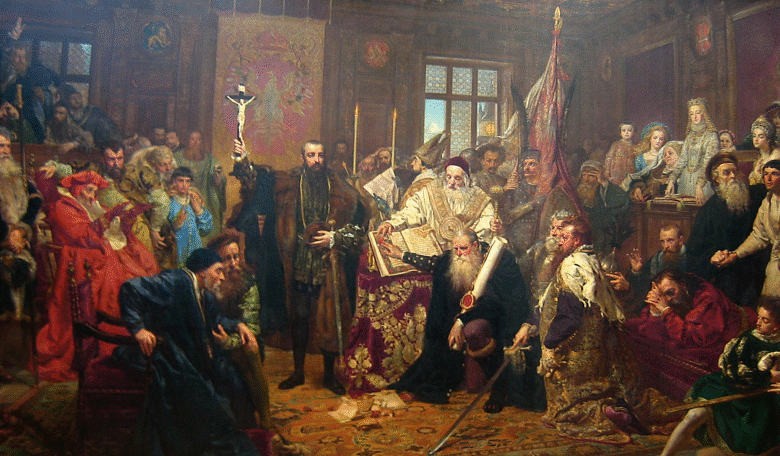
On July 1, 1569, delegates in the city of Lublin signed an agreement that sounds simple but felt revolutionary: the Kingdom of Poland and the Grand Duchy of Lithuania would act as one political body. It wasn’t just a handshake across a border. It was a choice to share a crown, hold a common parliament, speak with one voice in foreign policy and defense, and even align their money. When I first read the text of the act, I pictured a crowded hall buzzing with arguments, quills scratching through the night, and a king doing careful math about power, security and the future.
Why unite at all
Imagine two strong companies sitting next to a volatile market. Alone, each has talent and assets; together, they win scale, resilience and reach. That was the logic driving union. Poland brought populous lands and a seasoned parliamentary culture. Lithuania brought vast territories reaching toward the steppe and a hard-won tradition of frontier defense. Both faced pressure from ambitious neighbors. The union was a shield and a springboard at the same time, designed to cut the cost of constant rivalry while amplifying strengths that already existed on each side.
The drama in the room
If you’ve ever tried to merge teams, you know the hardest part isn’t the paperwork—it’s pride. Powerful Lithuanian magnates feared losing influence. Polish nobles insisted that a real union meant more than warm words. The talks dragged on for months, and at one point the Lithuanian delegation simply left. King Sigismund II Augustus answered with political pressure, incorporating several eastern lands into the Polish Crown to force the issue back to the table. It was tough, imperfect politics, but it worked. By the time the act was sealed, the shape of a shared future was finally clear.
What actually changed the next morning
Law on paper matters only when it shapes ordinary days. The union gave both partners a jointly elected monarch and a common Sejm—the parliament where nobles debated taxes, defense and diplomacy. It unified foreign policy, so envoys no longer carried competing instructions. A shared monetary policy brought more predictable trade. I like to think of a merchant from Kraków traveling to Vilnius with fewer coin headaches and a clearer sense of legal protections. Institutions don’t make headlines, but they quietly change how people plan, invest and trust.
Freedom as the glue
One surprising ingredient in this partnership was the political culture of the nobility. In the union, Polish and Lithuanian szlachta expected their ruler to rule by law, not by whim. They jealously guarded rights to speak, vote and organize. That culture could be noisy and even dysfunctional at times, but it built a habit of consent. In my own work, I’ve learned that agreements built on shared procedures, even messy ones, survive longer than deals forced by a single strong hand. The union’s rules gave both sides a way to argue without breaking the table.
A personal moment that made it real
Years ago I visited Lublin on a humid afternoon and ducked into the old castle to escape the heat. A guide pointed at a simple room and said, very softly, “Here they learned to say ‘we’.” It wasn’t a grand speech, but it stuck with me. Big changes don’t always arrive with drums. Sometimes they sneak in as a new pronoun, and once you start saying it, you can’t imagine going back. The union taught millions of people to think of themselves as citizens of one republic, not just neighbors with a fence.
What the union built over time
The immediate payoff was strategic depth. A united state could defend long borders more coherently and negotiate from a position of weight. Over the next generations, the Commonwealth became a major European power, trading grain through Baltic ports, hosting fairs that drew Italian bankers and Dutch merchants, and nurturing a rich culture where languages, religions and local laws coexisted under a common political roof. If you’re looking for a lesson for today, it’s this: integration multiplies opportunity when it respects identity instead of erasing it. The union was not a takeover. It was a federation designed to keep what was distinct while acting together where it mattered most.
How to read the tensions honestly
It would be easy to paint the union as effortless harmony. It wasn’t. Lithuanian elites continued to worry about Polish dominance, and regional rivalries flared. Some reforms stalled, and the system later struggled with veto politics. But none of that erases the core insight that guided 1569: cooperation beats fragmentation in a dangerous neighborhood. When I mentor younger colleagues, I tell them to plan for friction and still commit. The perfect moment rarely comes, and the perfect design doesn’t exist. What matters is building structures that outlast moods.
Bringing the story into everyday life
History feels close when you give it a place and a date. If you ever cross eastern Poland, set aside an hour in Lublin’s Old Town and stand by the gate where caravans once rolled in. Close your eyes and listen for the negotiation hum that must have filled those streets in 1569. Back at home, mark July 1 in your calendar as a quiet reminder to check your own alliances. Are you working alone where partnership would multiply your impact? Are you clinging to control where trust would serve you better? The union’s message is surprisingly practical: share the load, share the rules, share the win.
One sentence you can keep
The Union of Lublin turned two neighbors into a single republic not by erasing differences, but by writing a common script for leadership, law and security—proof that the smartest way to grow stronger is to grow together.